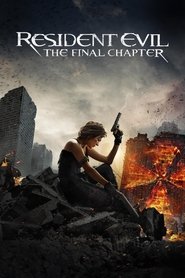
“Resident Evil: The Final Chapter” is a sci-fi action adventure that follows Alice, a fierce warrior, in her quest to destroy the evil Umbrella Corporation. With zombies running amok and the clock ticking against her, she must fight her way through hordes of the undead to save humanity. The film is a roller-coaster ride of non-stop action and explosive intensity, with Alice proving herself as the ultimate badass heroine. In this final chapter, she battles impossible odds and confronts her most dangerous adversary yet in an adrenaline-fueled race against time to save the world from destruction.”
CLICK HERE🠇🠇🠇☑️_Watch Resident Evil: The Final Chapter 2016 English Subtitles_
Review
Rising Strong in the Apocalypse: A Brené Brown-style Review of Resident Evil: The Final Chapter
In a world overrun by zombies and ruled by a sinister corporation, a former security officer turned resistance fighter named Alice must return to the Hive, the underground laboratory where the outbreak began, to stop a global extinction-level event and confront her own past. This is the premise of Resident Evil: The Final Chapter, the sixth and supposedly last installment in the most successful movie franchise ever based on a video game.
As a fan of both dystopian fiction and heroic journeys, I was curious and skeptical about this movie, directed by Paul W. S. Anderson (who also wrote all the previous ones) and starring Milla Jovovich as Alice. Would it be a mindless action flick with little substance or novelty? Would it be too convoluted or cheesy for its own good? Or would it be a fitting conclusion that honored its roots while adding new twists and emotions?
To my relief and surprise, The Final Chapter turned out to be one of the best entries in the series, if not one of the best zombie movies ever made. While not perfect or profound, it offers plenty of thrills, heart, humor, and insight into what it means to survive against all odds.
Let me break down some key aspects that make this movie worth seeing and reflecting on.
Storyline: The Final Chapter picks up immediately after the events of Resident Evil: Retribution (2012), which ended with Alice being ambushed by an army of clones of herself created by Dr. Isaacs (Iain Glen), who claimed to be working for the benevolent Red Queen (the computer program that had caused the initial outbreak) but really sought to enslave humanity under his control. As we soon learn, Alice is rescued by her old ally Claire (Ali Larter) and taken to a hideout where she meets a group of survivors led by Doc (Eoin Macken), who tells her that they have three days before the Umbrella Corporation deploys a swarm of airborne antivirus that will kill anything with the T-virus, except for a chosen few who were given the antidote. The catch? The antidote is in the Hive, which is now located underneath Raccoon City, the place where Alice grew up and where she has traumatic memories of losing her family to the outbreak. So Alice has to go back and face not only her physical enemies but also her psychological demons.
News: Although The Final Chapter was promoted as the last chapter, Anderson has hinted that he might consider making more movies if Jovovich and fans were interested. However, he also said that he had planned this installment as a definitive resolution that answered most of the questions raised in previous episodes and gave closure to Alice’s arc. The movie was shot in Cape Town, South Africa, using mostly practical effects and stunts.
Plot: As usual with Resident Evil films, there are plenty of plot holes, contrivances, and inconsistencies that one can nitpick or ignore. For example, it’s never explained how Alice survived being impaled by rebar at the end of Retribution or how she managed to recover all her gadgets and weapons despite being stripped naked by clones. It’s also unclear why Dr. Isaacs behaves more like a clownish villain than a credible threat or why Wesker (Shawn Roberts), another recurring antagonist who betrayed Alice before, seems to switch sides every five minutes for no reason other than serving the plot twists. And it’s hard to believe that after ten years since the first movie (Resident Evil in 2002) no one thought of using motorcycles or tanks against zombies until now. Nevertheless, these flaws do not detract from the overall enjoyment of watching Alice kick ass while facing ever-increasing odds and revelations.
Fact: The Resident Evil franchise has grossed over 1.2 billion dollars worldwide, making it the highest-grossing film series based on a video game. It has spawned not only six movies but also novels, comics, soundtracks, and merchandise. Anderson and Jovovich met on the set of the first movie and got married in 2009; they have two daughters together.
Casts: Jovovich is the undisputed star of The Final Chapter, carrying almost every scene with her charisma, physicality, and vulnerability. She has played Alice for almost fifteen years and undergone many changes in appearance, skills, personality, and allegiances; yet she still manages to make us care about her fate and root for her victory. Larter is also solid as Claire, giving her more depth than in previous entries. Macken is a welcome addition as Doc, a pragmatic doctor who balances Alice’s impulsiveness with his rationality.
Quote: There are many memorable lines in The Final Chapter that capture its mixture of humor and grit. One that stood out to me was when Alice meets a mannequin dressed like herself (a nod to the video game) and quips: “That’s more like it. Should’ve been wearing red though.”
Acting and Characters: While not exactly an Oscar-worthy ensemble or script, The Final Chapter benefits from its talented cast who inject nuance and chemistry into their roles. Jovovich shines not only in action scenes but also in quieter moments where she reflects on her past mistakes or connects with other survivors. Larter impresses by showing Claire’s resilience despite being experimented on by Umbrella Corp during Retribution; she also shares some touching scenes with Alice where they acknowledge their sisterhood without saying it aloud. Macken adds humanity to his wise-cracking character by delivering some of the best lines (such as “I’m sorry I called you an umbrella lady” to the Red Queen) and showing compassion for his patients. Glen hams it up as the demented villain but also manages to convey some sympathy for his twisted motives. Roberts reprises his role as Wesker with the same haughtiness and panache, though without much depth.
History: Resident Evil has a long and convoluted history that spans decades, media, and controversies. The first game was released in 1996 by Capcom, a Japanese video game company; it was a critical and commercial success that popularized survival horror genre. It spawned several sequels, spin-offs, and adaptations, including an animated movie and a TV series. The movie series, however, began in 2002 with Anderson’s vision that deviated from the source material but kept some of its iconic elements (such as the Umbrella Corp logo or the T-virus); it also introduced new characters such as Alice who were not part of the games. The movies have been criticized for their lack of fidelity to the games’ plots or characters but praised for their stylish visuals, thrilling action sequences, and strong female lead. Anderson has stated that he aimed to create a cinematic universe that could stand on its own while paying homage to the games.
Score and Popularity: The Final Chapter features a bombastic musical score by Paul Haslinger that mixes electronic beats with orchestral swells; it serves its purpose of enhancing the mood and pace of each scene without being too distracting or repetitive. The movie was released in January 2017 and grossed over 312 million dollars worldwide; though not as successful as some previous entries (such as Resident Evil: Afterlife in 2010), it still made a profit despite mixed reviews from critics.
Filming: As mentioned before, The Final Chapter was mainly shot on location in Cape Town, South Africa; it used practical effects such as explosions, car crashes, makeup, and stunts to create a visceral and tangible world of decay and danger. Anderson has said that he preferred to rely on real sets and props instead of CGI as much as possible, in order to give the movie a sense of authenticity and groundedness.
Evaluation: So, is The Final Chapter a good movie or a bad movie? I would say that it’s both, depending on your expectations and standards. If you crave intellectual depth, coherent plotting, or character development, you might feel disappointed or frustrated by its shortcomings; if you seek thrilling action set pieces, creative monsters, or emotional payoff, you might find it satisfying or entertaining. Personally, I enjoyed the movie for what it was: a fun ride with some moments of heartfelt connection between characters who had been through hell together. I also appreciated how Anderson tried to answer most of the lingering questions from previous movies (such as who created Alice or why Umbrella Corp kept making new breeds of zombies); he even tied in some loose ends from the first game (such as the fate of Jill Valentine) in a clever way. However, I did not think that The Final Chapter added much to the zombie genre; nor did it innovate much within its own franchise. It felt like a competent but safe conclusion that aimed to please fans without taking big risks.
Awards: Resident Evil movies have seldom received major awards or nominations; however, they have won some technical achievements such as best visual effects at Saturn Awards (Resident Evil: Apocalypse in 2005) or best 3D sequence at Hollywood Post Alliance Awards (Resident Evil: Afterlife in 2011).
Cinematography: Glen MacPherson was the cinematographer for The Final Chapter; he had also worked on several previous Resident Evil films. He used a variety of techniques such as handheld cameras, steadicam shots, POV shots, slow motion shots to enhance the kinetic energy and intimacy of the action scenes. He also employed filters and lighting to evoke different moods and locations, such as the desaturated blue tones of Raccoon City’s ruins or the fiery red hues of Isaacs’ lair.
Opinion: Resident Evil: The Final Chapter exceeded my low expectations and provided a satisfactory ending to a series that had its ups and downs. While not a masterpiece or a classic, it delivered what it promised: a thrilling ride with some heart. It also showed how much Jovovich has grown as an actress and as a person who has embodied Alice for so long; she revealed in interviews that this movie was particularly challenging for her because she had to confront her own fears and memories while performing such demanding physical feats. She also expressed her gratitude for the fans who had supported her and the franchise over the years.
Scenes: There are many memorable scenes in The Final Chapter that showcase Anderson’s flair for elaborate set pieces that blend practical effects, choreography, and camera work. Here are some highlights:
– The opening sequence with Alice trying to outrun an attack helicopter while hanging from wires attached to a moving van.
– The motorcycle chase through Raccoon City’s streets filled with undead creatures (including some gargantuan monsters) that culminates in an explosive crash.
– The elevator fight between Alice and Isaacs, where they use guns, knives, flamethrowers, and anything they can grab to hurt each other.
– The laboratory infiltration where Alice faces off against clones of herself in different outfits and weapons; this results in some funny moments where she comments on her own fashion choices or fighting style.
– The flashback scene where Alice remembers her family dying during the outbreak; this is shot like a dreamy nightmare that emphasizes colors, sounds, and close-ups of Jovovich’s face as she relives the trauma.
– The final showdown between Alice and Isaacs atop a Tower of Babel statue that rotates and tilts while explosions go off around them; this is both epic and silly, but it works.
Gossip: The Final Chapter was not immune to some behind-the-scenes drama or rumors. For example, some fans speculated that the movie would feature Ada Wong, a popular character from the games who had been hinted at in previous movies but never appeared; however, this turned out to be false. Some also claimed that Jovovich and Anderson had divorced during production, but they denied it and affirmed their love for each other.
Soundtracks: As with the previous Resident Evil films, The Final Chapter features a mix of original songs and licensed tracks that give it a distinct flavor. Some notable songs are:
– “White Rabbit” by Jefferson Airplane, used in a climactic fight scene.
– “Fight Like IRL” by The Prodigy, used during the opening credits.
– “Watch Your Back” by Benny Cassette feat. Meek Mill & InkMonstarr, used in a trailer.
– “Axe Man” by Jerry Goldsmith, used in an homage to Dawn of the Dead.
Analysis: Resident Evil: The Final Chapter can be read as a story about resilience, identity, redemption, and sacrifice. Alice embodies all of these qualities as she faces new challenges while reconciling with her past. She learns that she cannot do everything alone or always be right; she needs her allies’ help and respect to survive and thrive. She also realizes that her own purpose in life goes beyond killing zombies or finding answers; she has to inspire hope in others and protect what is worth saving. Her journey from being a pawn of Umbrella Corp to being an agent of change for humanity mirrors our own struggles to find meaning in a chaotic world where our choices matter.
Special Effects: While not relying on CGI too much, The Final Chapter still features some impressive special effects that enhance the realism and horror of the creatures and environments. Some of them are:
– The “Undead Dogs” that chase Alice through a tunnel and jump on her with glowing eyes and sharp teeth.
– The “Licker” that confronts Alice in a corridor, its tongue lashing out at her like a serpent.
– The “Dragon” that emerges from the ashes of Raccoon City’s destruction, its scales gleaming in the sunlight as it roars.
– The “Abomination” that bursts out of a tank and chases Alice through a warehouse, its multiple limbs flailing around like a spider.
Development: Resident Evil: The Final Chapter went through several stages of development before being released. Anderson had originally planned to make two movies back to back, but when Retribution did not perform as well as expected, he had to rethink his strategy. He also faced some challenges with casting (such as finding actors who could match Jovovich’s charisma and skill while fitting their roles) and budget (such as deciding which scenes to cut or simplify). He has said in interviews that he always wanted The Final Chapter to be more character-driven than some previous entries and that he was proud of how much his wife had grown as an actress.
Dialogue: While not exactly Shakespearean, The Final Chapter’s dialogue has enough wit and relatability to keep us engaged. Some examples are:
– Doc: “We don’t have time for sympathy.”
Alice: “Well, we don’t have time for bullshit either.”
– Wesker: “I’m tired of playing games with you.”
Alice: “I’m not playing games anymore.”
– Alice (to Isaacs): “What you’re doing is beyond evil.”
Isaacs: “Evil? No, no. You are wrong. Evil is a point of view.”
Crews: Apart from Anderson, Jovovich, MacPherson, and Haslinger, The Final Chapter had a large and talented crew that contributed to its look and feel. Some of them are:
– Kevin Phipps (Production Designer) who created the Hive’s many levels and chambers based on designs from previous movies but with new twists.
– Glen Boswell (Stunt Coordinator) who oversaw many of the action scenes and made sure that the actors were safe and believable.
– Tina Maskell (Costume Designer) who dressed Alice and her team in practical but stylish outfits that reflected their personalities and environments.
– Martin Hunter (Editor) who cut together the footage in a fast-paced yet coherent way that maintained suspense and momentum.
Criticism: Despite my positive review of The Final Chapter, I acknowledge that it has some flaws that might bother some viewers more than me. Some common criticisms are:
– The plot is too convoluted or predictable.
– The acting is too wooden or cartoonish.
– The violence is too gratuitous or repetitive.
– The themes are too shallow or clichéd.
– The resolution is too neat or unsatisfying.
Production: Making movies is never easy, especially ones with as much action, horror, and scope as Resident Evil: The Final Chapter. Anderson had to juggle multiple demands from studios, fans, actors, crew, and his own vision while adapting to changing circumstances such as weather conditions or budget limits. He also had to deal with the pressure of concluding a franchise that had been both lucrative and divisive. Nevertheless, he persevered and delivered a movie that he felt was true to his interests and goals as a storyteller.
Editing: One of the strengths of Resident Evil: The Final Chapter is its editing; it manages to keep us engaged even during exposition-heavy or dialogue-light scenes. Martin Hunter deserves credit for cutting together shots in an imaginative way that highlights contrasts, parallels, emotions, or plot points without being too obvious or distracting. Some examples are:
– The opening montage that condenses the events of previous movies into a stylish recap that sets the tone and mood of the new one.
– The flashback sequence where Alice remembers her family’s
Technical Data
- Runtime : 107
- Release : 2016-12-23
- Genre : Action, Horror, Science Fiction
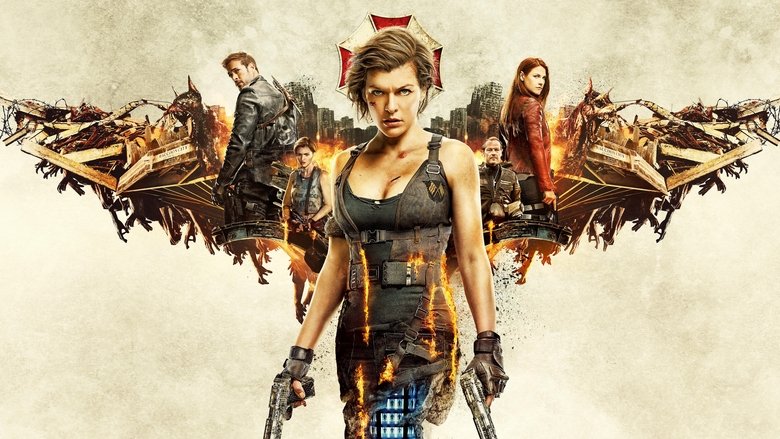
- Cast : Milla Jovovich as Alice, Iain Glen as Dr. Isaacs, Ali Larter as Claire Redfield, Shawn Roberts as Albert Wesker, Eoin Macken as Doc
- Crew : Paul W. S. Anderson as Director, Paul W. S. Anderson as Producer, Paul W. S. Anderson as Writer, Jeremy Bolt as Producer, Robert Kulzer as Producer
- Popularity 1.864
- Budget : $40,000,000
- Revenue : $312,242,626
- Company : Screen Gems, Constantin Film, Impact Pictures
- Summary : Picking up immediately after the events in Resident Evil: Retribution, Alice is the only survivor of what was meant to be humanity’s final stand against the undead. Now, she must return to where the nightmare began – The Hive in Raccoon City, where the Umbrella Corporation is gathering its forces for a final strike against the only remaining survivors of the apocalypse.
- Tagline : Back to the Hive.
